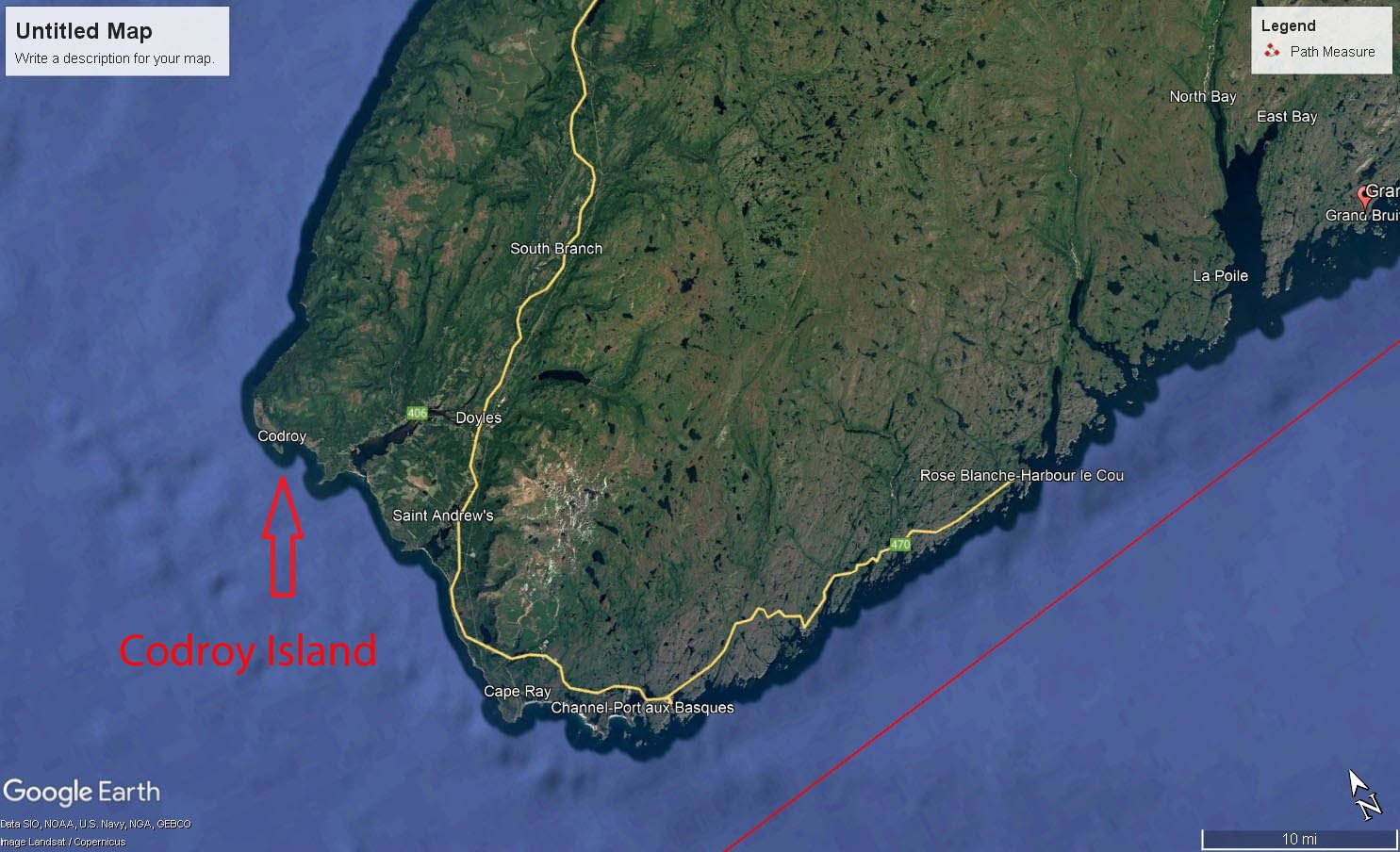
On June 6, 1900, Jules Cornu passed at Codroy, NL. He was 92 years old. Jules Cornu was born in France in 1802.
Jules Cornu is listed as Roman Catholic and born in France. At this point in the history of Western Newfoundland, few people knew how to read and write. When registering a birth, marriage or death, they simply pronounced the name in their native tongue, which sometimes was a mixture of French and English.
Following the Treaty of Utrecht (1713), Plaisance was taken over by the English and the name changed to Placentia. The French residents were migrated to St. Pierre and Cape Breton.
During the nineteenth century, French fishing fleets crossed the Atlantic Ocean to fish the French shore of Newfoundland. The Islands of St. Pierre and Miquelon, off the south coast of Newfoundland, remained part of France. Following the treaty of Utrecht (1713), these islands served as a base for the fishing operations on this side of the Atlantic, while select harbours on the “French Shore”, like Codroy Island and Red Island were assigned to St. Pierre merchants as local fishing stations.
Following the treaty of Utrecht (1713), these islands served as a base for the fishing operations on this side of the Atlantic, while select harbours on the “French Shore”, like Codroy Island and Red Island were assigned to St. Pierre merchants as local fishing stations.
Jules Cornu most likely arrived in the Codroy area with the French fishing fleet, via Codroy Island.
Since Jules Cornu married Elizabeth Benoit about 1850, we can assume that he arrived sometime before 1850. Jules and Elizabeth had at least 8 children. Their daughter Alice is my great-grand-mother.
With the coming of the railway to Stephenville Crossing, Jules and Elizabeth’s son, Giles Corneau moved his family from Codroy to Harry’s Brook (Stephenville Crossing) around 1905. At the time, the Corneau family included his wife (Sarah Osmond) and their 7 children. Giles and Sarah would have at least 3 more children after their arrival at Stephenville Crossing.