Skip to content
History is not a science. There are basically three ways of connecting with the past.
First, there is recorded history, which includes census records, church records, vital statistics, photographs, newspaper archives, etc..
There are also other considerations when you look into the past. In all cases, one has to “consider the source”. Most recorders of history are consiously or unconsciously biased. Some recorders will actually invent stories and sometimes, there will be mistakes.
Secondly, you can remember it. But of course, there are the obvious limitations. Nonetheless, chances are you will remember most of your what you experienced during your lifetime.
Thirdly, there is “oral history”, stories that have been pasted on from one generation to the next. Such stories may, some times include legends, sometimes altering or exaggerating what really happened.
Growing up in Stephenville Crossing, one would sometimes hear stories, usually told by older residents, that didn’t quite seem to fit, at the time.
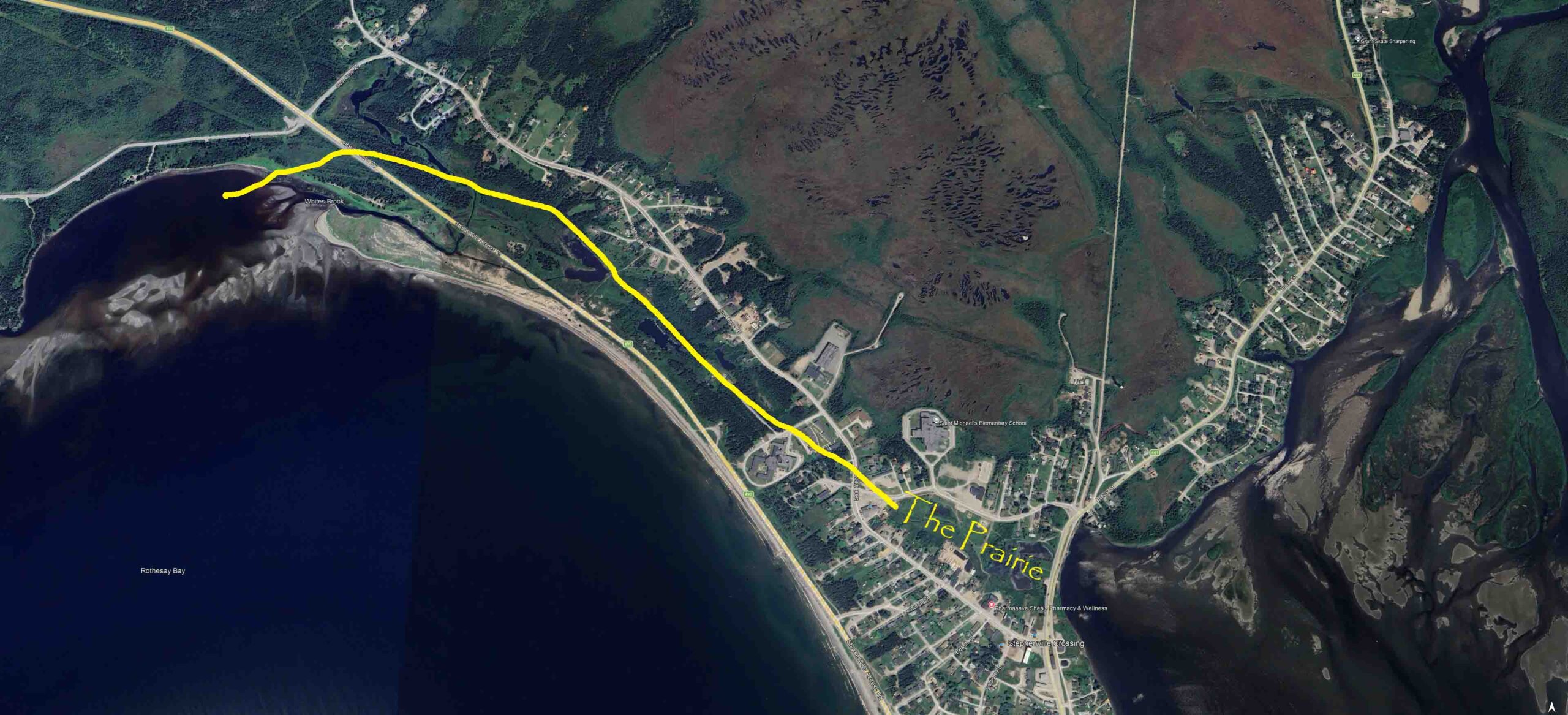
Back in the 1950s, there were stories suggesting that there was a time, when one could row a dory from the mouth of Harry’s Brook via the “Prairie” pond to Seal Cove and into the Bay. Of course, today the “Prairie” pond is no longer.
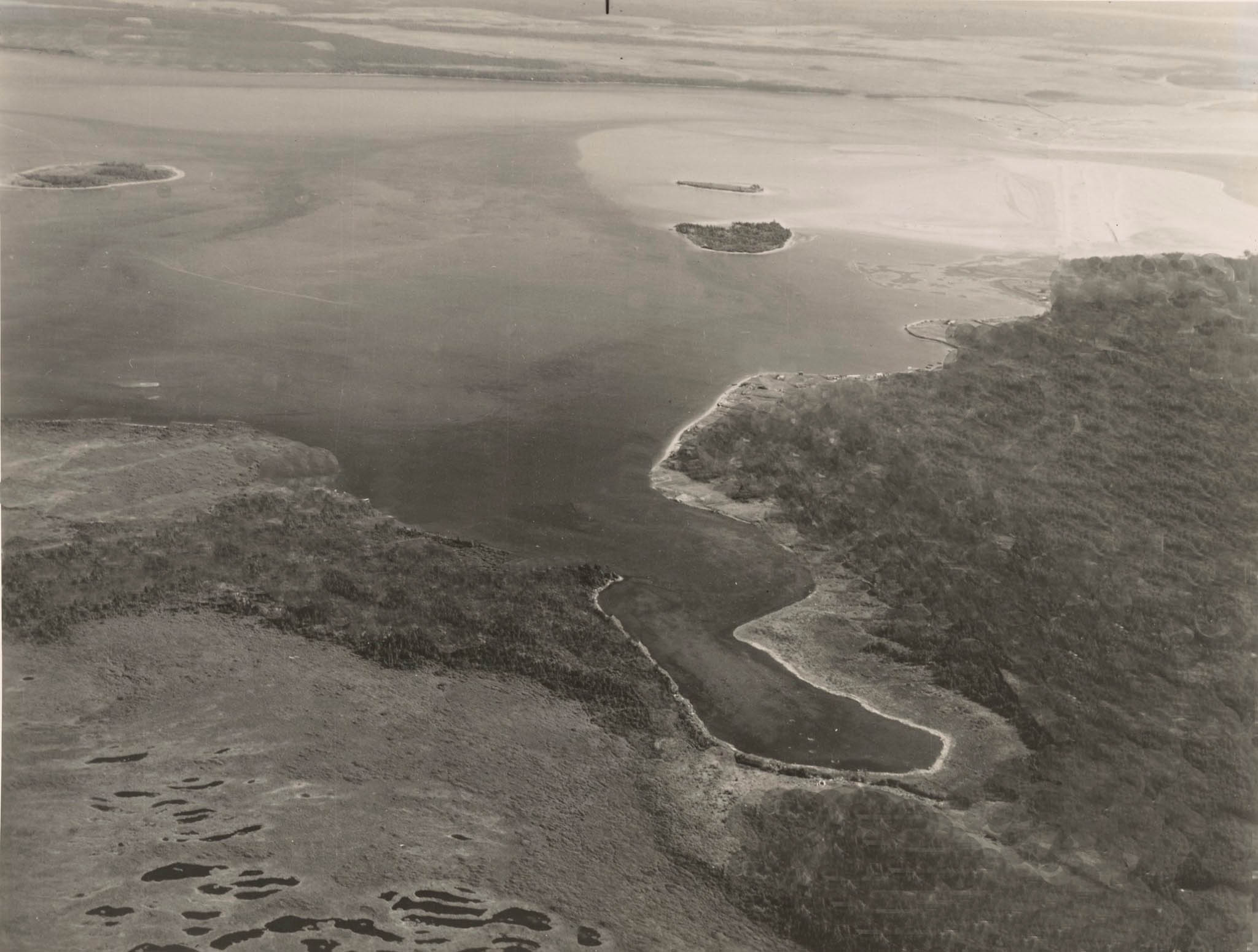
The above aerial photograph, taken in 1940, shows the “Prairie” pond, pretty much the way it looked in the 1950s. It has looked this way (geographically) since the coming of the railway, which was constructed in the late 1890’s, with one difference. The settlement of Stephenville Crossing essentially followed the coming of the railway. The building of a causeway across what was basically a cove, created a pond, which became known as the “Prairie”.
To visualize what things may have looked like before the coming of the railway, we would have to remove the railway and 99% of the settlement of Stephenville Crossing. After removing the railway and the town (using photo Shop), this is what remains of the 1940 Photograph.
The person that I recall telling this story was Margaret Downey, the wife of Frank Downey, affectunately known as “Mammy” Downey. “Mammy” Downey was the granddaughter of Andrew Hawkins and Eugenie Lucas who were living at the prairie in 1880.
Eugenie Lucas was the daughter of Jean Marie Lucas and Venerande Cormier.
Jean Marie Lucas was the son of Jean Marie Lucas and Henrietta LeJeune who were residents of the area as far back as 1840.
This directory listed 2 Benoit families, 1 Hawkins family and 4 Lucas families living at the “Prairie”.
On September 7, 1879, Andrew Hawkins married Eugenie Lucas. This is the family referenced in the 1904 Directory.
The records suggest that the Benoit and Lucas families have lived in this area for more than 180 years.
The above map of Newfoundland, dated 1901 suggests a railway stop near Main River called Benoit. It would appear that the railway stop (station) was initially called after the Benoit family who lived at that location.
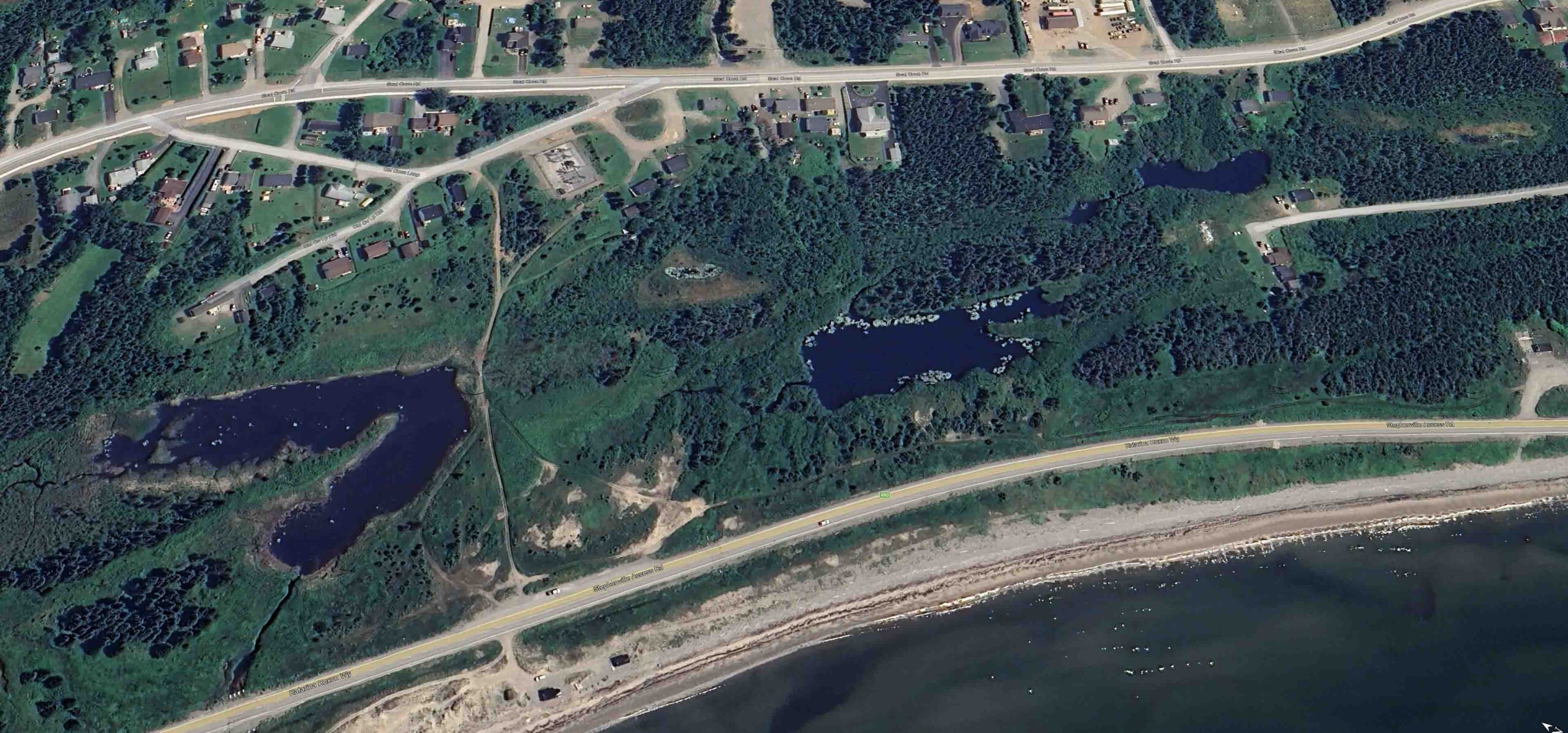
At least once, I recall walking the beach to Seal Cove and swimming in a pond called “Lac Au Pomme“(sic). The pond was one of several that ran in a line between the Prairie and Seal Cove. My guess is that the water level in these ponds was essentially the same level as the bay.
Most of Stephenville Crossing is situated on sand bar deposited by Harry’s Brook, in which case that sand bar has been evolving forever.
And yes, there was very likely a time when one could row a dory from the mouth of Harry’s Brook via the “Prairie” to Seal Cove and into the Bay.
error: Content is protected !!